Loading...
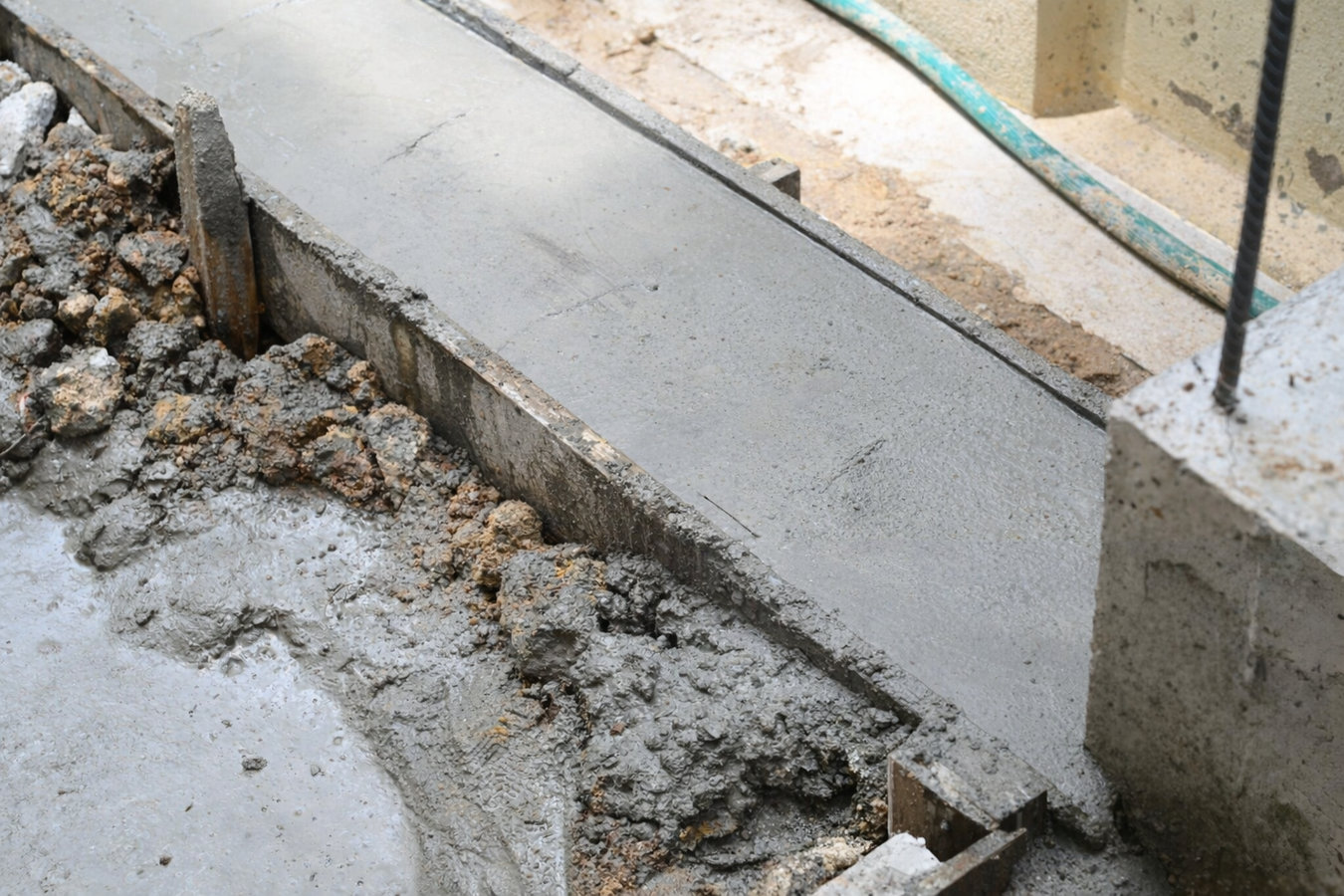
A sunken driveway or garage floor is a tripping hazard and an eyesore - but it does not have to mean tearing everything out. We lift settled concrete back into place at a fraction of the cost of new pours, with most Bowling Green jobs done in a single morning.
Foundation raising in Bowling Green lifts sunken or uneven concrete slabs back to their original height by drilling small holes and pumping material underneath - most residential jobs on a driveway, patio, or garage floor take two to four hours and cost significantly less than pouring new concrete.
If you have a section of your driveway, patio, or garage floor that has dropped lower than the surrounding concrete, you have two options: tear it out and pour new, or lift what is already there back into place. Foundation raising - also called slab lifting or mudjacking - works by filling the void that formed beneath the slab and using that material to push the concrete back up to level. The process is clean, relatively quick, and in most cases far less disruptive than a full replacement.
Foundation raising is closely related to concrete cutting - in situations where a slab is too damaged to be raised effectively, cutting out the affected section first is often the right first step before any repair work begins.
If a door that used to swing freely now drags on the floor or a window suddenly feels stiff, your home may be shifting. When a slab beneath the structure moves, the frame of the house moves with it, throwing doors and windows out of alignment. This is one of the earliest signs homeowners notice, and it is worth taking seriously rather than treating as a minor nuisance.
Cracks that run diagonally across a slab, or sections of concrete that have clearly dropped lower than the area around them, are a direct sign of settling. In Bowling Green's clay-heavy soil, this kind of movement is common after a wet spring followed by a dry summer. If you can see a raised lip where two sections of concrete meet, that is both a tripping hazard and a sign the slab needs attention.
If you notice your floors feel higher on one side of a room than the other, or if a ball rolls on its own across what should be a level surface, the slab beneath may have shifted. This is especially common in homes built on fill dirt in Bowling Green's older neighborhoods - Plano, Dishman Acres, areas near Western Kentucky University - where the soil has had decades to compact unevenly.
Bowling Green's wet winters and springs mean water regularly tests how well your yard drains. If water sits against your foundation or pools in low spots near the house after a rainstorm, it is likely working its way under your slabs and washing away the supporting soil. Left alone, this leads to settling - and eventually to the kind of damage that costs far more to fix.
We lift settled concrete throughout Bowling Green and Warren County using two proven methods: mudjacking (a cement-and-soil slurry pumped under the slab) and polyurethane foam injection (an expanding foam that fills voids and cures quickly). Both methods drill small holes through the slab, push material underneath, and bring the surface back to level - the right choice depends on your slab, the cause of the settling, and the timeline that works for you. We assess each situation before recommending a method, because the wrong approach for your specific soil conditions can lead to the same problem returning within a season or two.
When a slab has settled so significantly that raising alone is not practical, we coordinate with our slab foundation building service to handle full replacement when needed - so you are not left managing multiple contractors. For situations where the concrete itself needs to be cut out before any lifting or replacement can happen, our concrete cutting team handles that first step cleanly, leaving straight edges and a stable perimeter for the work that follows.
Suited for driveways, patios, and garage floors where cost is a priority and the timeline allows for a 24-hour cure before driving.
Better for areas that need faster cure times or where adding weight to the soil is a concern, like near existing foundation walls.
Addresses empty space beneath slabs without necessarily lifting them - useful when a slab is level but has an unsupported area underneath.
Bowling Green sits on karst limestone bedrock - a geology that creates underground voids over time and causes ground movement that homeowners in more stable-soil regions rarely deal with. On top of that bedrock sits clay-heavy soil that swells when it absorbs moisture and shrinks when it dries out. Bowling Green also averages around 50 inches of rainfall per year, with the heaviest rain falling in winter and spring. That combination - expansive clay over porous limestone, soaked by regular heavy rain - is one of the most demanding environments for concrete in the region. Driveways, patios, and garage floors in Bowling Green settle faster and more often than in drier or geologically simpler cities.
Older neighborhoods in Bowling Green add another layer of complexity. Homes in areas like Plano and Dishman Acres were built in the 1950s through 1980s on fill dirt that has had decades to compact unevenly. Slabs from that era often lack the drainage infrastructure that modern construction requires, which means water problems have been building up for a long time by the time a homeowner notices something is wrong. Across the region - including communities we serve like Franklin and Glasgow - the same karst geology and clay soils create similar settling patterns, and the solution is almost always the same: diagnose the drainage cause, lift the slab, and address what caused the void in the first place.
When you call, we ask a few basic questions about what you are seeing, where the problem is, and how long it has been going on. We respond to all inquiries within 1 business day and schedule a time to look at the slab in person before quoting anything. Do not trust a quote given over the phone without a site visit - the price depends on what is actually happening under your concrete.
We walk the area with you, look at the slab, and check for signs of what caused the settling. We probe the soil around the edges and look at how water drains away from the area. This is where we earn our fee - we explain what we found in plain terms and tell you whether raising the slab makes sense or whether something else is going on.
You receive a written estimate outlining what work will be done, which method will be used, and the total cost. We also confirm whether a permit is required for your project - in Bowling Green, some foundation work requires sign-off from the City Building Inspection Department or Warren County, and we handle that paperwork before work begins.
The crew drills small holes through the slab, pumps the lifting material underneath, and monitors the slab as it rises back into position. Most jobs are done in a few hours. Once the slab is level, the holes are patched with concrete, the crew cleans up the work area, and we give you a clear timeline for when the surface is safe to walk and drive on.
We come out, look at your slab, and give you a written quote - no pressure, no commitment required.
(270) 936-1028We assess why your slab sank before recommending how to fix it. Bowling Green's karst limestone bedrock and clay-heavy soils mean settling rarely has a single simple cause. A repair that skips the diagnosis and goes straight to pumping material underneath is likely to need redoing - we find the cause first so the fix actually lasts.
Our crews work throughout Bowling Green and the surrounding region, including Franklin and Glasgow. We understand how the clay-heavy soils in Warren County behave across different neighborhoods and seasons - and that understanding shapes how we size each job, what method we recommend, and what drainage follow-up we flag for you.
Unlike a full concrete replacement - which can take days of curing before you can park on it - most foundation raising jobs in Bowling Green are done in two to four hours and ready for normal use within 24 hours. Minimal disruption is not a marketing phrase here; it is just how the process works when it is done efficiently.
Every estimate we provide is written, itemized, and explained in plain language before anyone touches your concrete. According to the Foundation Repair Association, a written scope of work is a standard expectation for legitimate foundation repair contractors - and we hold to that on every job, no exceptions.
Contractors who verify licensing with the Kentucky Department of Housing, Buildings and Construction and carry liability insurance are following the minimum standards that protect you as a homeowner - we hold to both, and we are happy to provide proof before any work begins.
Learn more about local soil conditions from Western Kentucky University Karst Research, which documents the limestone geology beneath Bowling Green that contributes to slab settling in this region.
When a slab is too damaged to raise, clean cutting removes the affected section before any repair or replacement work begins.
Learn moreFull slab replacement for situations where raising is not practical - poured level, reinforced, and finished to current standards.
Learn moreBowling Green's wet spring season fills our schedule fast - call or request an estimate now to lock in your spot before the rush.