Loading...
Whether you are building a new home, a detached garage, or an addition, the slab foundation underneath it has to be right. We pour concrete slab foundations in Bowling Green designed for local soil conditions and built to pass inspection the first time.
Slab foundation building in Bowling Green means pouring a single thick layer of reinforced concrete directly on the prepared ground, serving as both the floor and the structural base - most residential projects take three to seven days of active work, followed by at least a week of curing before framing can begin on top.
Homeowners in Bowling Green most often need slab foundation building for new construction - a new home, a detached garage, a workshop, or a room addition. In this region, a poured concrete slab is the foundation type most builders and architects recommend because it performs well in climates where the ground does not freeze deeply. Getting site prep, reinforcement, and drainage right before the pour is what separates a slab that holds up for decades from one that shifts and cracks within a few years.
If your project involves a structure that also needs concrete footings below grade, a slab project often pairs with foundation installation to handle the full below-grade scope in a single coordinated project.
The clearest sign you need slab foundation building is that you have a new structure planned. New homes, detached garages, workshops, and room additions in Bowling Green all need a poured concrete slab to serve as both floor and structural base before framing can begin.
Small hairline cracks are common and often harmless. But cracks wider than a quarter inch, cracks that run diagonally, or spots where one side of a crack sits higher than the other are signs of ground movement beneath. In Bowling Green, karst geology and clay soils can both cause this - those cracks deserve a professional look before deciding between repair and replacement.
If water collects on your slab surface or sits against the foundation edges after rain, the slab may have settled unevenly. Bowling Green averages around 50 inches of rain per year, which is well above the national average, so drainage problems show up quickly and cause more damage here than in drier climates.
When a slab foundation shifts or settles unevenly, the framing above it moves too. Doors and windows that used to open smoothly and now drag or leave gaps at the corners are often an early signal of slab movement - especially in older Bowling Green neighborhoods where clay soils were not fully assessed before construction.
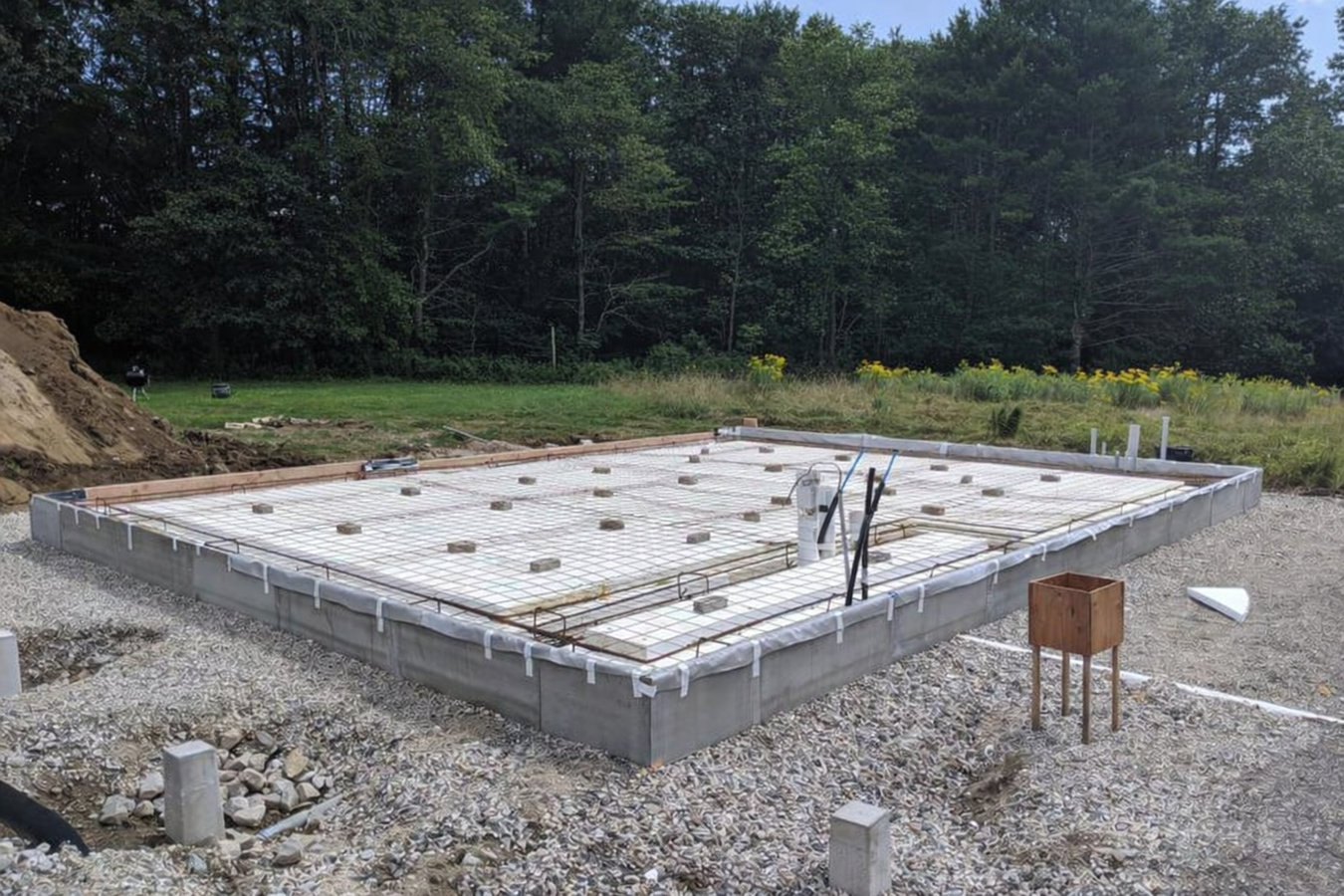
We pour residential slab foundations for new homes, garages, workshops, and room additions throughout Bowling Green and Warren County. Every slab includes site grading, a compacted gravel base for drainage, and steel reinforcing bars placed in a grid before the concrete arrives. We also build the thickened edges - called footings - that carry the weight of the walls above. Skipping or undersizing those edges is one of the most common shortcuts that leads to long-term slab problems. All projects are permitted and inspected through the appropriate local authority.
For homeowners replacing an existing slab - under an old outbuilding, garage, or addition - we handle the demolition and haul-away as part of the same scope. If your project also requires below-grade concrete walls or piers, we coordinate through a foundation installation scope. And for new homes or additions that need concrete footing work at specific structural points, we also offer concrete footings as a standalone or combined service.
Suited for homeowners building a new home, garage, or workshop from the ground up and needing a properly reinforced, permitted slab as the base.
For room additions and attached structures where the new slab must tie into the existing home's foundation at the correct height and drainage grade.
For homeowners demolishing and rebuilding an old, cracked, or undersized slab that is no longer structurally sound enough to build on.
Bowling Green sits on karst limestone bedrock - the same geology behind Mammoth Cave, located about 30 miles away. This means voids, sinkholes, and irregular underground formations can exist beneath the surface on some properties. A contractor who has worked extensively in this area knows to assess site conditions before setting forms, rather than assuming every lot is the same. The clay-heavy soils in many Bowling Green neighborhoods add another layer - clay expands when wet and shrinks when dry, putting seasonal stress on any slab that was not built with proper drainage to keep water moving away from the edges.
Bowling Green is also one of the fastest-growing cities in Kentucky, and that growth means building permit offices are busier than ever. Contractors who know the local process - whether you are in the city limits or in an unincorporated Warren County address - keep your project moving on schedule. We regularly serve homeowners in Franklin, KY and Glasgow, KY as well, where similar soil and permitting conditions apply.
We respond within 1 business day and schedule a site visit before quoting. Factors like slope, soil conditions, and equipment access all affect price - an in-person look lets us give you a written breakdown rather than a rough guess over the phone.
We apply for the required building permit with the City of Bowling Green or Warren County on your behalf. Permit processing typically takes one to two weeks - we build this into the project timeline from day one so there are no surprises.
The crew grades and compacts the soil, lays a gravel base for drainage, places steel reinforcing bars in a grid, and sets the wooden forms that shape the slab. This prep work - often done over one to two days - is what separates a slab that lasts decades from one that cracks and shifts within a few years.
The concrete pour typically happens in a single day. After at least seven days of curing - protected from Bowling Green summer heat if needed - the building inspector signs off and the slab is ready for framing. We walk you through the finished work before we leave.
We respond within 1 business day. On-site estimates are free, no obligation, and include a written quote before any work begins.
(270) 936-1028Every slab foundation project we build in Bowling Green goes through the required permit and inspection process. We handle the paperwork with the city or county building office and coordinate the inspection - you get a documented record that an independent inspector verified the work.
We work throughout Warren County and the wider region, including Franklin and Glasgow. Local presence means we know the permit offices, understand soil conditions across different Bowling Green neighborhoods, and can schedule site visits quickly without travel surcharges.
Bowling Green's karst limestone bedrock and clay-heavy soils shape how we assess every site before pouring. The Kentucky Geological Survey tracks karst features across the region - we factor those local conditions into site prep rather than using a one-size-fits-all approach.
Bowling Green summers push into the 90s with high humidity - conditions that cause fresh concrete to dry too fast and crack before it cures. We schedule pours for the right time of day and use curing techniques suited to the season, so the slab gains full strength the way it is supposed to.
The Portland Cement Association and the American Concrete Institute both publish guidance on slab preparation and curing standards that shape how we work. Combining that industry knowledge with direct experience in Bowling Green soil conditions means you get a slab built to last, not just built to pass a visual inspection on day one.
Full foundation installation for new homes and additions, including poured concrete walls and below-grade structural work.
Learn morePoured concrete footings at specific structural load points for additions, decks, and new construction projects.
Learn moreSpring and fall booking fills fast - call today for a free on-site estimate and a written quote before any work begins.